Secure cloud infrastructure for financial services combines strong identity controls, encryption, segmented architecture, continuous monitoring,…
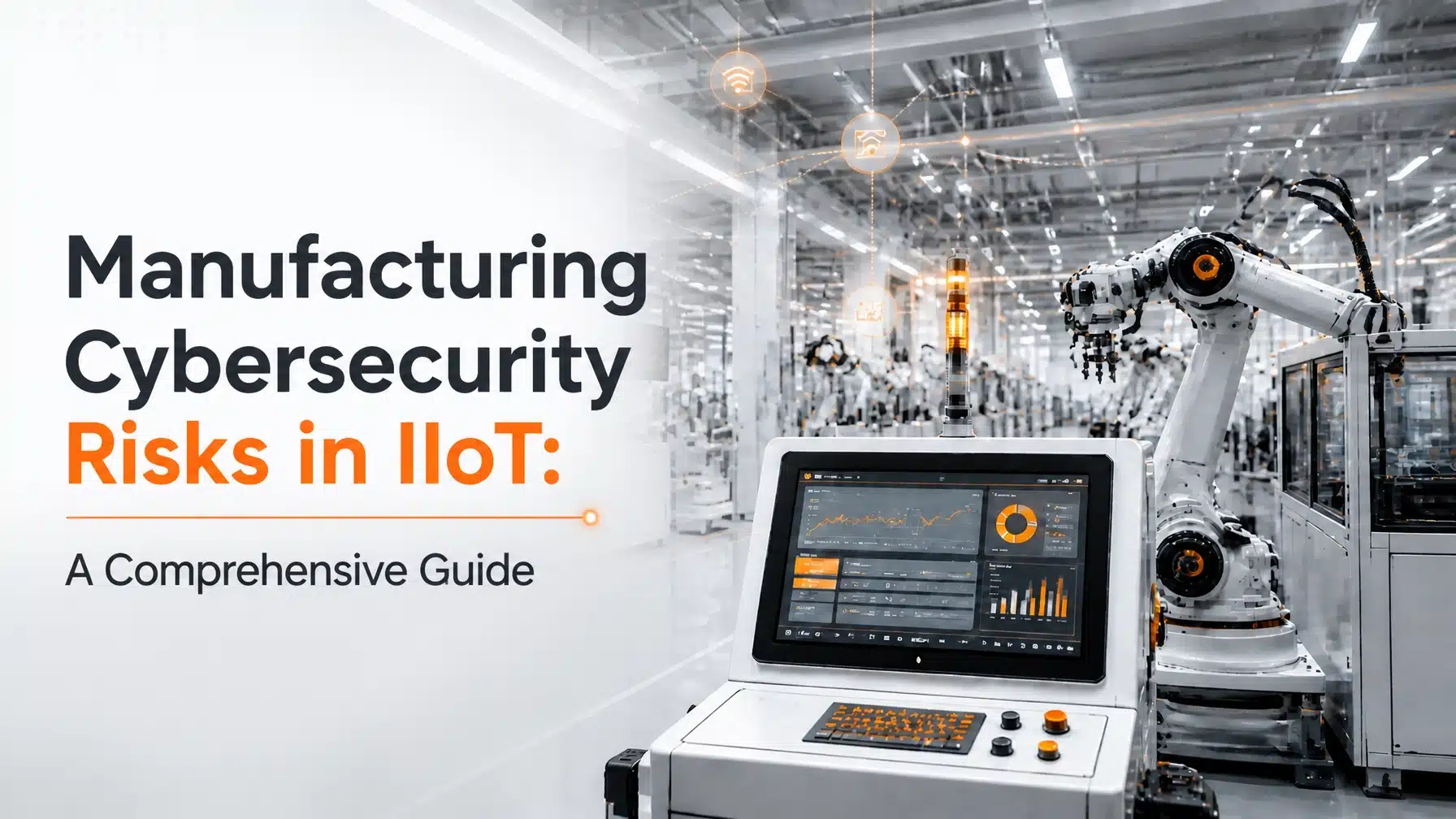
Manufacturing Cybersecurity Risks in IIoT: A Comprehensive Guide
Manufacturing has become the primary target for global cyberattacks. Your production floor now faces more threats than traditional financial institutions or healthcare providers. Recent research from IBM X-Force reveals that manufacturing accounts for approximately 27.7% of all cyber incidents. Consequently, securing your facility requires more than just a basic firewall.
The rise of the Industrial Internet of Things (IIoT) has connected once-isolated machines to the broader internet. While this connectivity drives efficiency, it also introduces significant manufacturing cybersecurity risks IIoT. Cyberattacks on the sector rose to approximately 17% of all incidents in 2025. This figure represents a sharp increase from the 9% recorded just one year earlier.
This guide explores the modern threat landscape for manufacturers. You will learn how to identify vulnerabilities in your Industrial IoT (IIoT) environment. Furthermore, we provide a strategic framework to protect your production lines from sophisticated digital threats.
The Convergence of IT and OT Networks
For decades, operational technology (OT) and information technology (IT) lived in separate worlds. Your plant floor machines operated on isolated networks with little outside contact. However, the modern push for data-driven manufacturing has changed everything. This convergence of networks is the leading driver of manufacturing cybersecurity risks IIoT.
When you connect sensors, robotics, and programmable logic controllers (PLCs) to your corporate network, you expand your attack surface. Attackers often enter through a simple phishing email in the IT department. They then move laterally into the OT environment. Once inside, they can manipulate physical processes or halt production entirely.

Understanding the Dominance of Ransomware and Malware
Modern cybercriminals do not just want your data. They want to stop your business. The Verizon 2026 Data Breach Investigations Report indicates that ransomware is involved in roughly 61% of manufacturing breaches. Additionally, various forms of malware play a role in about 75% of these incidents.
Ransomware is particularly effective in a factory setting because downtime is expensive. Attackers know that every hour of halted production costs you thousands of dollars. As a result, they demand high ransoms to unlock your systems. In current scenarios, approximately 25% of manufacturing ransomware incidents result in a full OT site shutdown.
Malware can also cause physical damage to your equipment. A specialized virus could change temperature settings or pressure limits. Such changes pose a significant risk to both your machinery and your employees. Protecting your cybersecurity infrastructure is therefore a matter of physical safety.
Top IIoT Security Manufacturing Vulnerabilities
Many manufacturers struggle with security because their equipment was never designed for internet connectivity. Identifying these weaknesses is the first step toward mitigation.
- Legacy OT Equipment: Many machines on your floor may be decades old. These systems often lack the ability to receive security patches.
- Default Credentials: IIoT devices frequently ship with generic usernames and passwords. Attackers easily find these credentials in online databases.
- Unsegmented Networks: If your entire plant operates on one flat network, a single breach can spread everywhere.
- Insecure Vendor Access: Third-party vendors often require remote access for maintenance. If this access is not secured with MFA, it becomes an open door for hackers.
Addressing these manufacturing cybersecurity risks IIoT requires a proactive approach. You cannot wait for a breach to happen before you secure these legacy systems.

Strategic Defense for Industrial IoT Cybersecurity
Securing a manufacturing environment requires a multi-layered strategy. You must move beyond simple perimeter defense to a more granular model.
Implementing the ISA/IEC 62443 Model
The ISA/IEC 62443 standard provides a framework for zones and conduits. This model suggests grouping your systems into security zones based on their function. You then control the “conduits” or communication paths between these zones. This structure prevents an attacker from moving freely across your entire operation.
Adopting Zero Trust for OT
A Zero Trust architecture assumes that no user or device is trustworthy by default. Every access request must be verified, even if it comes from inside the facility. This approach is essential for modern industrial IoT cybersecurity. By requiring continuous authentication, you significantly reduce the risk of lateral movement.
Asset Visibility and Inventory Management
You cannot protect what you cannot see. Many plant managers do not have a full inventory of every connected device on their floor. Professional OT cybersecurity manufacturing services use specialized tools to discover all IIoT assets. This visibility allows you to monitor for unusual behavior and identify unpatched devices.
Mandatory Multi-Factor Authentication (MFA)
MFA is one of the most effective ways to stop credential theft. You should require MFA for all access points, especially for remote vendor support. As a Microsoft Security Solution Partner, Terminal B recommends using robust identity platforms like Entra ID to manage these permissions.

Compliance and Regulatory Considerations
Regulatory pressure on manufacturers is increasing. If you work with defense contracts, you likely face strict requirements.
- CMMC: The Cybersecurity Maturity Model Certification is mandatory for many Department of Defense suppliers.
- NIST SP 800-171: This framework outlines the requirements for protecting sensitive information on non-federal systems.
- ITAR: International Traffic in Arms Regulations require strict control over who can access specific manufacturing data.
Failing to meet these standards can lead to lost contracts and heavy fines. Strategic IT consulting can help you navigate these complex requirements.
The Business Case for Proactive Security
Cybersecurity is not just an IT expense. It is an investment in your operational continuity. A successful attack does more than just steal files. It can destroy your reputation and your bottom line.
Consider the cost of a three-day production halt. Most manufacturers find that the cost of proactive security is a fraction of the cost of one major incident. Furthermore, robust security can be a competitive advantage. Your customers want to know that their supply chain is secure.
Terminal B understands the unique challenges of the manufacturing sector. We provide comprehensive managed IT services designed to bridge the gap between IT and OT. Our “Skytivity” model ensures that your systems remain monitored and protected 24/7.

Partner with a Microsoft Security Solution Partner
Securing your manufacturing environment is a complex task. You need a partner who understands both the server room and the shop floor. Terminal B offers the specialized expertise required to mitigate manufacturing cybersecurity risks IIoT.
Our team helps you implement network segmentation and Zero Trust policies. We also assist with compliance readiness for NIST and CMMC. By offloading this complexity, you can focus on your core business goals.
Ready to secure your production line? Contact Terminal B today for a strategic technology consultation.
Frequently Asked Questions
What are the biggest manufacturing cybersecurity risks IIoT faces?
The biggest risks include ransomware that halts production, unpatched legacy equipment, and the convergence of IT and OT networks. These factors allow attackers to move from a corporate email to a machine controller.
Why is manufacturing targeted more than other industries?
Manufacturers are targeted because they are highly sensitive to downtime. Attackers believe manufacturers are more likely to pay a ransom to resume production quickly. Additionally, IIoT devices often have weaker security than traditional IT equipment.
How does network segmentation help IIoT security manufacturing?
Network segmentation divides your plant floor into isolated zones. If an attacker breaches one machine, they cannot easily reach the rest of your facility. This limits the “blast radius” of any potential incident.
What is the role of a Microsoft Security Solution Partner in manufacturing?
A Microsoft Security Solution Partner like Terminal B helps you leverage advanced security tools like Microsoft Defender for IoT. We integrate these tools with your existing infrastructure to provide a unified view of your security posture.
Is CMMC compliance mandatory for all manufacturers?
No, CMMC is primarily required for companies in the Defense Industrial Base (DIB). However, the standards used in CMMC are excellent benchmarks for any manufacturer looking to improve their security.
Related Posts