Maintaining healthcare security is a complex and high-stakes responsibility in 2026. Consequently, IT directors must…
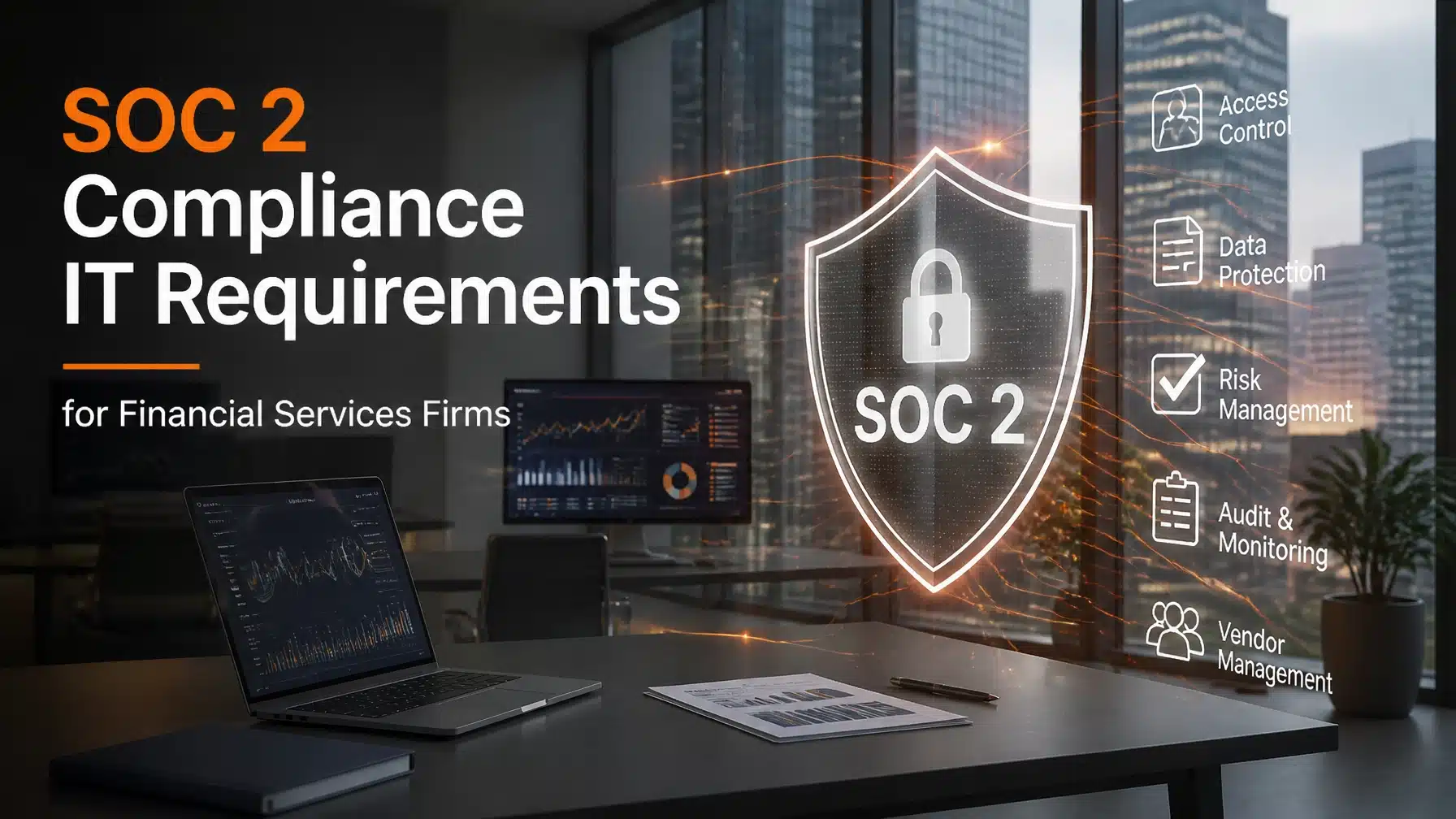
SOC 2 Compliance IT Requirements for Financial Services Firms
Maintaining data integrity is no longer a luxury for modern financial organizations. Consequently, SOC 2 compliance IT requirements for financial services firms have become the essential benchmark for security and trust. This framework ensures that your organization handles client data with the highest levels of protection and transparency.
Financial firms must now navigate a complex landscape of evolving threats and tightening regulations. For instance, recent industry data shows that 70% of enterprise buyers now require a SOC 2 report from their technology and financial partners before signing a contract. Moreover, many firms struggle with the initial hurdles of the audit process. Recent studies indicate that 34% of organizations fail their initial readiness assessments specifically due to gaps in access control and Multi-Factor Authentication (MFA).
To remain competitive and secure in the current market, your organization must adopt a proactive IT strategy. This guide explores the core technical requirements, modern security trends, and the regulatory deadlines that define the current landscape for financial services.
Why SOC 2 Type II is Non-Negotiable in 2026
The financial sector faces unique pressures from both clients and regulators. While a SOC 2 Type I report proves you have controls in place at a specific moment, a SOC 2 Type II report provides evidence that those controls operate effectively over an extended period. This distinction is vital for establishing long-term credibility.
Regulatory mandates are also accelerating the need for high-level security. For example, the SEC Regulation S-P amendments have established a critical deadline of June 2026 for smaller advisors to meet enhanced safeguarding standards. These rules require a written incident response program and strict oversight of service providers. Therefore, achieving SOC 2 compliance serves as a primary vehicle for meeting these federal obligations.
Trust is the currency of the financial world. If you cannot demonstrate a robust security posture, you risk losing institutional clients and facing significant regulatory fines. Terminal B helps organizations bridge this gap by aligning IT infrastructure with the specific Trust Services Criteria required for a successful audit.
Essential IT Requirements for Financial SOC 2 Compliance
Achieving compliance requires more than just a policy manual. You must implement specific technical controls that auditors can verify through automated evidence collection.
1. Identity and Access Management (IAM)
Access control remains the most scrutinized area of a SOC 2 audit. Consequently, you must enforce the principle of least privilege across your entire network. This means users only access the data necessary for their specific job functions.
Modern standards now demand Phishing-resistant MFA (Passkeys) for all remote and administrative access. Traditional SMS-based codes are no longer sufficient to stop advanced credential theft. By implementing passkeys, you significantly reduce the risk of unauthorized entry. Furthermore, you must conduct regular access reviews to ensure that former employees or transferred staff no longer have access to sensitive financial systems.
2. Comprehensive Encryption Protocols
Data must remain protected whether it is sitting in a database or traveling across the internet. You should implement AES-256 encryption for data at rest and TLS 1.3 for data in transit. This ensures that even if a breach occurs, the stolen information remains unreadable to unauthorized parties.
Furthermore, encryption must extend to your backup solutions. Financial services firms often fall victim to ransomware because their backups were not properly isolated or encrypted. A secure, cloud-based backup strategy is a core requirement for the Availability criteria of SOC 2.
3. Continuous Monitoring and Logging
Auditors require proof that you are watching your systems 24/7. Consequently, your organization needs a centralized Security Information and Event Management (SIEM) solution. A SIEM collects logs from your firewalls, servers, and cloud applications to detect suspicious patterns in real-time.
Terminal B recommends a Zero Trust architecture as the foundation for modern monitoring. Under a Zero Trust model, your system assumes every access request is a potential threat until it is verified. This approach aligns perfectly with the continuous monitoring requirements of a SOC 2 Type II audit.
Accelerating Certification Through Automation
The traditional path to SOC 2 compliance was often slow and manual. In the past, firms spent months gathering spreadsheets and screenshots for their auditors. However, the modern approach leverages compliance automation platforms to streamline the entire process.
Data shows that using automation can reduce the time to achieve certification from an average of 6.8 months down to just 3.1 months. These tools connect directly to your cloud environment, such as Microsoft Azure, to pull evidence automatically. This reduces the burden on your internal team and ensures your controls remain active throughout the year.
As a Microsoft Security Solution Partner, Terminal B integrates these automation tools directly into your existing Microsoft 365 environment. This creates a “continuous compliance” loop where your security posture is monitored every minute, not just once a year during audit season.
The Skytivity Advantage: Proactive Compliance Management
Managed IT services should do more than just fix broken computers. At Terminal B, our Skytivity model provides a comprehensive framework designed specifically for highly regulated industries like financial services and healthcare.
Our Skytivity Managed Services include:
- 24/7 SOC Monitoring: Our Security Operations Center watches your network around the clock to stop threats before they escalate.
- Automated Patch Management: We ensure every device in your organization is running the latest security updates.
- Security Awareness Training: We educate your employees to recognize phishing attempts, turning your staff into a human firewall.
- Zero Trust Security: We implement granular access controls that verify every user, every device, and every connection.
By choosing a partner that understands the nuances of SOC 2 compliance IT requirements for financial services firms, you can focus on growing your business while we handle the technical complexity of security.
Moving Toward a Secure Future
The June 2026 deadline for SEC Regulation S-P is approaching quickly. Organizations that wait until the last minute will find themselves struggling to meet the rigorous demands of a SOC 2 audit. Consequently, the best time to start your compliance journey is now.
A successful audit requires a combination of the right technology, documented processes, and expert guidance. By aligning your IT strategy with the SOC 2 Trust Services Criteria, you protect your firm from cyber threats and position yourself as a trusted leader in the financial marketplace.
Ready to Secure Your Firm?
Don’t let compliance hurdles slow your growth. Terminal B offers strategic guidance to help you navigate the complexities of SOC 2 and SEC regulations. Contact us today for a strategy session to assess your current IT environment and build a roadmap for a secure, compliant future.
Frequently Asked Questions
What is the difference between SOC 2 Type I and Type II for financial firms?
SOC 2 Type I evaluates your security controls at a single point in time. It proves you have a plan. In contrast, SOC 2 Type II evaluates how those controls perform over a period, typically six to twelve months. Financial institutions and institutional investors almost always require Type II reports because they prove consistent operational effectiveness.
How does Zero Trust help with SOC 2 compliance IT requirements for financial services firms?
Zero Trust is a security framework that requires strict identity verification for every person and device trying to access resources on a private network. It directly supports SOC 2 requirements for access control, monitoring, and data protection. By assuming no one is trusted by default, you create a more resilient environment that auditors view very favorably.
Is Microsoft 365 sufficient for SOC 2 compliance?
Microsoft 365 provides many of the tools needed for compliance, such as MFA, encryption, and logging. However, the platform must be configured correctly to meet SOC 2 standards. Working with a Microsoft Security Solution Partner like Terminal B ensures your tenant is hardened and that all necessary security features are active and monitored.
What are the consequences of missing the SEC Regulation S-P June 2026 deadline?
Failing to meet the SEC Regulation S-P requirements can result in significant regulatory fines, increased audit scrutiny, and potential legal liability in the event of a data breach. Beyond the financial penalties, the damage to your firm’s reputation and the loss of client trust can be devastating for a financial services provider.
Related Posts