Updated 6/11/2026 Managing technology in a Texas medical practice often feels like performing surgery with…
Centralized ERP System for Construction: Growth & Efficiency
Updated:6/8/2026
Contributed by Stinsora Consulting
Good teamwork drives successful construction projects. From early design to final inspection, your team needs clear and accurate information. However, many firms still use disconnected tools that slow work and cut into profit. Studies show that deep ERP integration in construction can reduce costs by up to 39.5% and increase productivity by as much as 74% (Source: MDPI Research). Therefore, more firms are replacing separate systems with a centralized ERP system for construction.
Terminal B is proud to share this guide with Stinsora Consulting. We believe strong operations start with the right technology base. If your team spends more time fighting software than managing projects, your current setup is likely holding you back. Moreover, this post explains the signs of an outdated system and shows how centralized data can help.
Signs You Have Outgrown Your Construction ERP
Your IT systems should help your team do better work. However, old systems often create hidden problems that slow progress. Therefore, it is important to spot these warning signs before they hurt a project.
Data Silos and Fragmented Information

When departments use separate software that does not connect, data silos form quickly. Consequently, your team sees different numbers in different places. That creates errors, delays, and confusion. If your accounting software does not connect to project management, you lose real-time visibility. However, custom integrations often create more work over time. Your IT team must keep fixing those connections.
Inefficient Communication Channels
Does your team still depend on long email chains and manual spreadsheets for updates? Those methods take too much time. Moreover, they often cause missed details and lost data. In a busy job-site environment, even a short delay can leave a crew waiting for hours. A centralized ERP system for construction fixes this problem by giving everyone one place for updates.
Lack of Real-Time Data Access
Construction decisions happen fast. However, printed reports become outdated almost immediately. Without quick access to reliable data, your leadership team may make slow decisions. Consequently, costs can rise and schedules can slip. Real-time data helps you act early instead of reacting late.
Manual and Redundant Processes
Old systems force your staff to enter the same data more than once. Therefore, the risk of human error goes up. Your overhead also grows. Moreover, your skilled employees should spend time on growth, not repetitive data entry.
Why Inadequate Systems Block Your Growth
The wrong tools do more than slow your team down. They also limit how far your business can grow. If you want to win $100MM+ contracts, your backend systems must be strong and dependable.
- Scalability Issues: A rigid system cannot grow with your company. Therefore, adding a new office or division becomes harder than it should be.
- Poor Project Management: Weak ERPs often lack strong forecasting and work in place tracking. Consequently, budget control becomes harder across complex job sites.
- Increased Operational Costs: Small inefficiencies add up quickly. Moreover, manual mistakes and communication delays reduce your margins month after month.
- Delayed Decision-Making: Leaders need accurate data to act with confidence. However, when they cannot see the full picture, they miss important opportunities.
The Strategic Advantages of a Centralized ERP System for Construction

Moving to a modern, centralized platform changes how your organization works. It turns data into a business advantage instead of a daily problem. Moreover, as a Microsoft Security Solution Partner, Terminal B often sees how secure cloud tools make these ERP benefits even stronger.
Enhanced Collaboration and Communication
A centralized system gives every project one source of truth. Team members can update data from the office or the field. Therefore, the foreman and the accountant see the same numbers at the same time.
Real-Time Data and Analytics
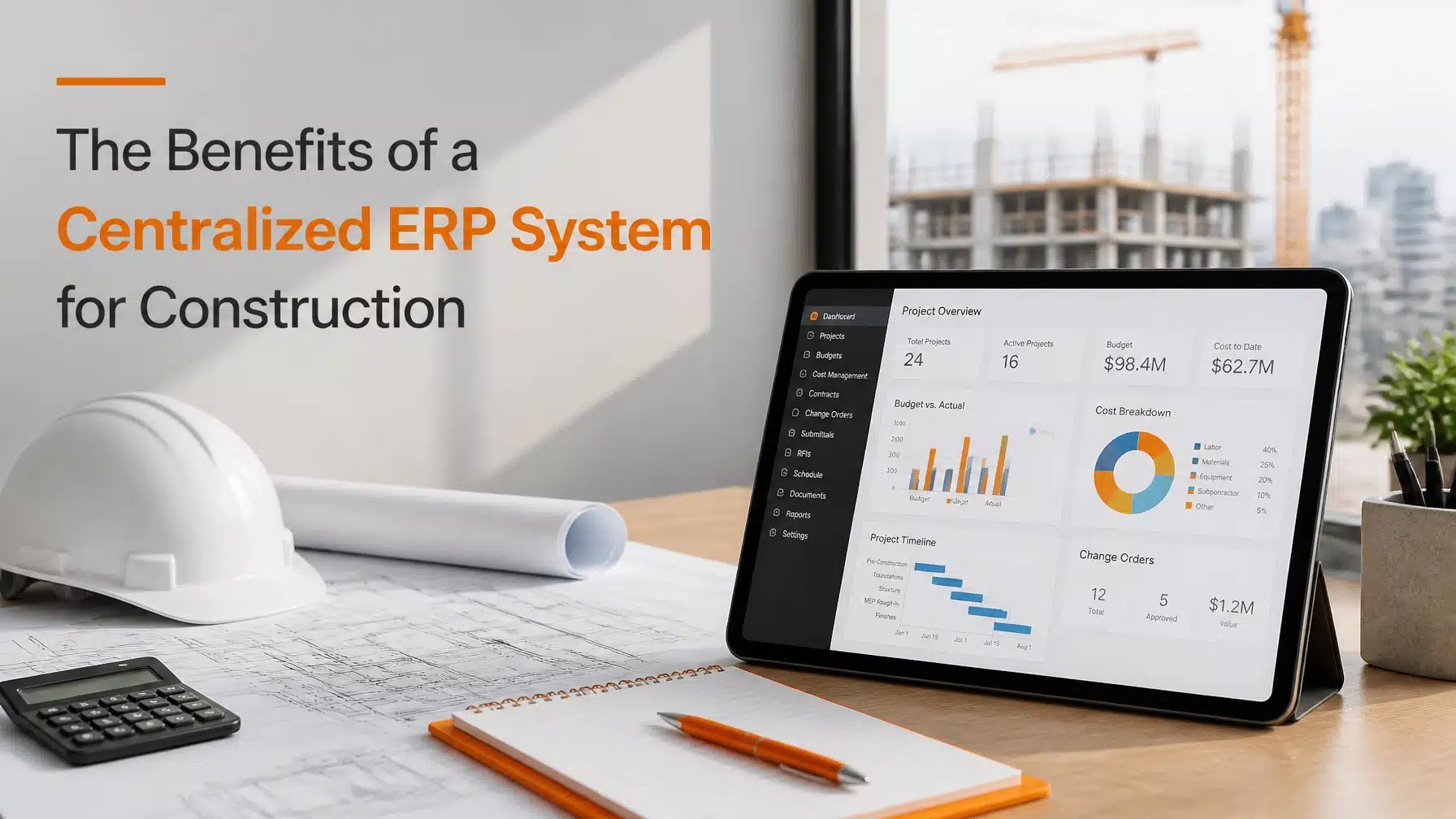
Modern ERPs provide live dashboards and reports. Consequently, you can spot delays and bottlenecks before they become major issues. This visibility also supports better resource planning and stronger cash flow control.
Streamlined Processes and Automation
Automation takes care of routine tasks that slow your team down. For example, it can handle billing cycles and digital timecard approvals. Moreover, automation reduces errors and frees your team to focus on higher-value work.
Integration with Modern IT Tools
A strong centralized ERP system for construction should work with the tools you already use. It should connect with your Microsoft 365 environment and Building Information Modeling (BIM) software. Therefore, you get one connected system that supports each phase of the project lifecycle.
How to Evaluate Your Current Tech Stack in 5 Steps
If you think your current system is falling short, use this simple review process. Stinsora Consulting recommends this approach to help you choose a solution that fits your business goals.
- Identify Pain Points: Gather honest feedback from each department. Look for repeated issues with data access, communication, or slow manual work.
- Assess System Capabilities: Compare your current features with what your team actually needs. Therefore, you can see where the biggest gaps exist.
- Calculate the Cost of Inefficiency: Measure the time and money lost because of system limits. Moreover, include overtime, rework, and delays caused by bad data.
- Research Modern ERP Solutions: Focus on platforms built for construction firms. Consequently, mobile access and cloud support should be high priorities for field teams.
- Consult Stakeholders: Bring key team members into the decision early. Their support is essential for a smooth rollout and long-term use.
Moving Forward: A Collaborative Approach to Operational Maturity

Upgrading your technology is a major step. However, the long-term value of a centralized ERP system for construction is much greater than the initial effort. Better collaboration leads to higher efficiency. As a result, your business can scale more confidently across Texas and beyond.
At Terminal B, we focus on the IT infrastructure and cybersecurity that keep your ERP secure and reliable. We help firms in regulated industries stay compliant while they modernize. Moreover, our status as a Microsoft Security Solution Partner means you get direct support and proven expertise to protect project data.
Stinsora Consulting adds the construction-specific guidance needed to align your processes with your technology. Together, we help you achieve operational maturity. Therefore, you can move forward with a clearer plan and the right systems in place.
Are you ready to stop fighting your software and start scaling your business?
Schedule a strategic consultation today to discuss how we can optimize your construction technology.
Frequently Asked Questions
What is the biggest benefit of a centralized ERP system for construction?
The biggest benefit is one clear source of truth. When your project, financial, and field data live in one system, you remove the confusion caused by data silos. Therefore, your team can make faster decisions and reduce billing and cost-tracking errors.
How does a centralized ERP improve job site safety?
Many modern ERP systems include tools for safety compliance and certifications. For example, you can track worker training and equipment maintenance in the same system used for scheduling. Consequently, only qualified workers stay on site, and equipment is easier to manage safely.
Can a centralized ERP integrate with Microsoft 365?
Yes. Modern ERP platforms are built to work with the tools your team already uses. Moreover, as a Microsoft Security Solution Partner, Terminal B helps construction firms connect ERP data with Azure and Microsoft 365 for secure collaboration and better document control.
Is it expensive to switch to a new ERP system?
A new ERP requires an upfront investment. However, staying with an inefficient system often costs more over time. Manual errors, project delays, and duplicate admin work create ongoing expenses. Therefore, many firms see strong returns through better margins and faster project delivery.
Ready to Transform Your Operations?
Evaluating your ERP system is the first step towards unlocking your team’s full potential. Don’t let outdated technology hinder your success. Let Stinsora Consulting help you evaluate your current ERP and processes. We want to understand your company processes and goals to help you achieve them by aligning your technology solutions. Improved collaboration and data can be achieved through process and system optimization or by finding and implementing the right solution that can drive your company forward.
Take Your Business Further with Terminal B
Operational maturity isn’t just a goal — it’s a necessity for businesses striving to stay competitive. Terminal B helps you achieve it with strategic IT support, advanced cybersecurity, and tailored solutions that evolve as your business grows. By streamlining processes, mitigating risks, and enhancing system reliability, Terminal B empowers you to reach new levels of efficiency and resilience.
Don’t wait for disruptions to force change — take control of your operational maturity today.
Related Posts