
Maintaining data integrity is no longer a luxury for modern financial organizations. Consequently, SOC 2…
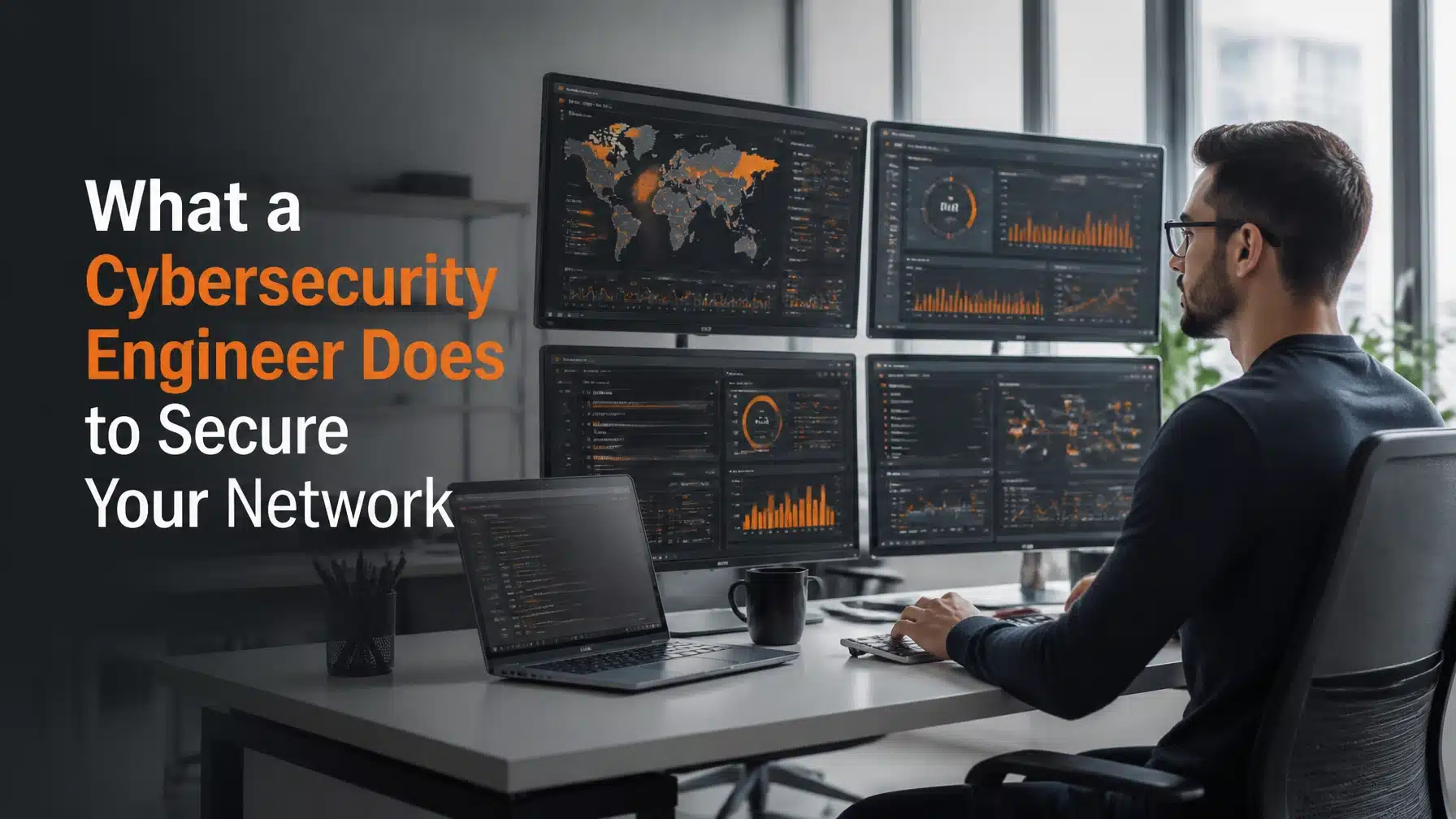
What a Cybersecurity Engineer Does to Secure Your Network
Updated 6/10/2026
A cybersecurity engineer acts as the digital architect and guardian of your organization’s most sensitive assets. These experts design and implement layered defenses to prevent unauthorized access and data breaches. Consequently, they ensure your business remains operational even in the face of sophisticated global threats.
In essence, what a cybersecurity engineer does involves a blend of proactive defense and constant monitoring. They build secure infrastructure, manage identity protocols, and utilize advanced automation to stay ahead of hackers. For mid-sized companies in Texas, these professionals provide the critical wall between your data and the rising tide of cybercrime.
The Modern Threat Landscape in June 2026
The digital battlefield has shifted dramatically in recent months. Global cybercrime costs are now forecast at a staggering $10.8 trillion. Furthermore, the average cost of a data breach has reached $4.88 million. These figures highlight the massive financial risk that organizations face without proper protection.

Recent data suggests that vulnerability exploitation is now the primary attack vector. It accounts for 31% of all successful breaches. This trend has officially surpassed credential abuse as the most common entry point. Additionally, ransomware continues to plague businesses by appearing in 48% of all security incidents.
A significant 94% of security professionals identify AI as the dominant driver of change. Hackers now use automated tools to find weaknesses faster than ever before. Therefore, understanding what a cybersecurity engineer does is essential for any executive looking to safeguard their future.
Defining What a Cybersecurity Engineer Does for Your Defense
You might wonder how a single professional manages such a vast array of threats. The answer lies in a multi-layered approach that combines technical skill with strategic foresight. Here is a breakdown of the core functions of these digital guardians.
Proactive Vulnerability Management
One primary task involving what a cybersecurity engineer does is the continuous hunt for weaknesses. They don’t wait for a breach to happen. Instead, they perform regular vulnerability scans and penetration tests. Consequently, they identify software bugs or misconfigurations before attackers can exploit them.
This process requires deep knowledge of both legacy systems and modern cloud environments. By patching systems and hardening network perimeters, they significantly reduce your overall attack surface. This proactive stance is a hallmark of the Managed IT Services provided by Terminal B.
AI-Driven Defense and SOC 2.0
Modern engineers now utilize AI-powered security operations, often called SOC 2.0. These systems process millions of data points in real-time. As a result, they can detect anomalous behavior that a human might miss. For example, if an employee logs in from Austin and then five minutes later from Tokyo, the AI triggers an immediate alert.

A cybersecurity engineer fine-tunes these AI models to minimize false positives. They ensure the system remains sensitive to real threats while allowing normal business operations. This specialized oversight prevents “alert fatigue” for your internal teams.
Addressing Shadow AI and Mobile Phishing
Employee behavior remains a significant variable in any security strategy. Currently, “Shadow AI” poses a major risk. This occurs when employees use unapproved AI tools to process company data. Consequently, sensitive information can leak into public datasets without your knowledge.
Furthermore, mobile-based phishing scams have evolved rapidly. These attacks currently see a 40% higher click-through rate than traditional email phishing. A cybersecurity engineer implements Mobile Device Management (MDM) and security awareness training to mitigate these risks. They educate your staff on the latest social engineering tactics to build a strong security culture.

The Strategic Shift to Zero Trust
The old “castle and moat” strategy no longer works in a world of remote work and cloud apps. Therefore, what a cybersecurity engineer does today often centers on Zero Trust principles. This philosophy assumes that no user or device is trustworthy by default.
Under a Zero Trust model, every request for access must be verified. The engineer implements Multi-Factor Authentication (MFA) and micro-segmentation. As a result, even if an attacker breaches one part of the network, they cannot move laterally to other systems.
Furthermore, forward-thinking engineers are now preparing for post-quantum readiness. They are evaluating encryption methods that can withstand the future power of quantum computing. This long-term thinking ensures your organization remains secure for years to come.

Why Your Texas Organization Needs a Microsoft Security Solution Partner
Choosing the right partner is just as important as the technology itself. Terminal B is proud to be a Microsoft Security Solution Partner. This status gives us direct access to the latest security features within the Microsoft 365 and Azure ecosystems.
We understand the unique needs of mid-sized companies across Texas. Whether you are in healthcare, finance, or construction, we tailor our defenses to meet your specific compliance requirements. Our Cybersecurity Services go beyond simple antivirus software. We provide a comprehensive shield that includes:
- 24/7 Monitoring: Our Skytivity model ensures constant vigilance over your infrastructure.
- Compliance Alignment: We help you navigate HIPAA, NIST, and other regulatory frameworks.
- Direct Support: As a Microsoft partner, we provide faster resolution for complex cloud security issues.
- Local Expertise: We are a Texas-based team that values long-term partnerships over quick transactions.
Strategic Guidance for a Secure Future
Security is not a one-time project. It is a continuous process of adaptation and improvement. By understanding what a cybersecurity engineer does, you can better appreciate the value of a proactive IT strategy. Don’t wait for a $4.88 million breach to take action.
Terminal B simplifies the complexity of modern IT. We provide the expertise you need to focus on your core business goals. Our team acts as an extension of your organization to ensure your technology drives growth rather than creating risk.
Book Your IT Strategy Session Today
Are you ready to strengthen your network against modern threats? We invite you to schedule a professional consultation with our experts. We will evaluate your current security posture and provide actionable recommendations.
Contact Terminal B today to book your IT strategy session.
Frequently Asked Questions
What is the difference between a security analyst and a cybersecurity engineer?
A security analyst typically focuses on monitoring and responding to active threats. In contrast, a cybersecurity engineer focuses on building and maintaining the security architecture. The engineer designs the systems that the analyst uses to protect the organization.
How often should a cybersecurity engineer perform network audits?
Ideally, you should conduct comprehensive audits at least annually. However, continuous monitoring and monthly vulnerability scans are standard for modern organizations. This frequent cadence allows the engineer to catch new threats as they emerge.
Can a cybersecurity engineer help with HIPAA or NIST compliance?
Yes, compliance is a core part of what a cybersecurity engineer does. They implement the technical controls required by frameworks like HIPAA or NIST. Consequently, they ensure your organization avoids heavy fines and maintains its reputation.
What is “Shadow AI” and why should I care?
Shadow AI refers to the use of unauthorized AI applications by employees. It is dangerous because sensitive corporate data could be fed into public AI models. An engineer helps you set policies and technical blocks to prevent this data leakage.
About the Author: Greg Bibeau
Greg Bibeau is the Founder and CEO of Terminal B. With three decades of experience in the IT industry, he has helped hundreds of Texas businesses navigate the complexities of technology. Under his leadership, Terminal B has become the premiere Managed IT Service Provider in Central Texas, known for proactive “Skytivity” solutions and deep expertise as a Microsoft Security Solution Partner.
Related Posts