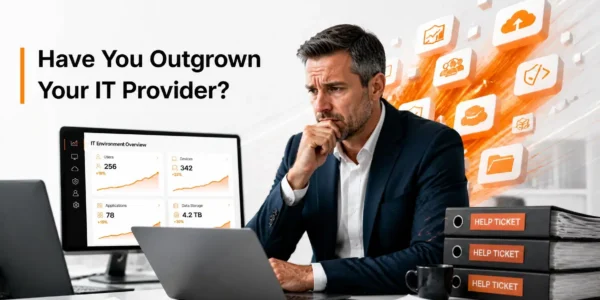
Modern organizations often treat technology as a separate department rather than a strategic engine. This…
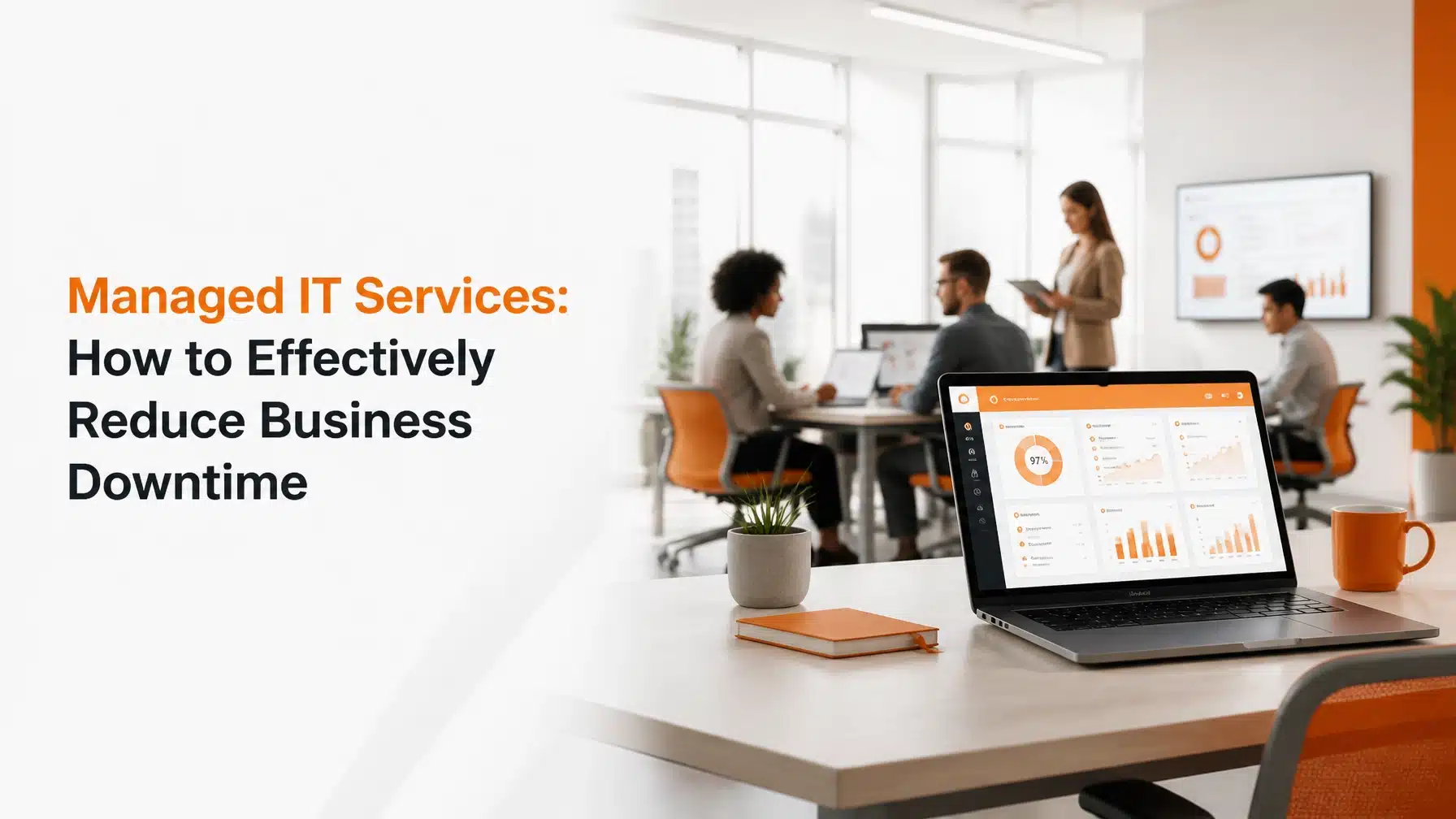
Managed IT Services: How to Effectively Reduce Business Downtime
Updated: 6/8/2026
Managed IT Services provide the essential foundation for any modern organization that values uptime and productivity. Downtime is far more than a simple frustration for your employees. It represents a significant financial drain that can cripple your operations. Recent data from the IBM Cost of a Data Breach Report indicates that small business recovery costs now often exceed $200,000 per incident. Consequently, your organization must adopt a proactive strategy to maintain continuous operations.
The current landscape for small and mid-sized businesses is increasingly volatile. For organizations with under $25M in revenue, the average severity of ransomware-related downtime increased by 26% year-over-year in June 5, 2026. This trend highlights the urgent need for a Microsoft Security Solution Partner who understands these specific risks. Many firms currently lack the internal resources to combat these sophisticated threats effectively. As a result, 60% of small firms still lack the inspection teams and formal disaster recovery plans needed for survival.
Managed IT Services solve these problems by shifting your technology from a reactive expense to a strategic asset. Instead of waiting for systems to fail, a proactive model identifies and resolves issues before they impact your workflow. This approach ensures your team stays focused on their core objectives without technical interruptions. In this guide, we will explore the multi-layered strategy that reduces downtime and protects your bottom line.
The High Cost of Reactive “Break-Fix” IT
Many businesses still rely on the outdated “break-fix” model of IT support. In this scenario, you only call for help after a critical system has already failed. This reactive approach is inherently flawed because it guarantees downtime. Furthermore, it creates unpredictable expenses that are difficult to budget. When your network goes down, your staff sits idle while payroll costs continue to accumulate.
Research published by MDPI on SME resilience demonstrates that digital stability directly correlates with financial performance. Companies that wait for failures experience longer recovery times and higher total costs. Conversely, a managed approach stabilizes your environment and provides predictable monthly costs. By investing in proactive management, you eliminate the “firefighting” culture that drains your resources.
5 Ways Managed IT Services Effectively Reduce Business Downtime
Implementing a structured IT management plan is the most effective way to secure your operations. Here are the five core pillars of how Managed IT Services minimize disruptions.

1. Proactive Monitoring and Rapid Resolution
Your IT infrastructure requires constant vigilance to remain healthy. We use sophisticated 24/7 monitoring tools to track the performance of your servers, networks, and cloud environments. These tools identify unusual activity or hardware degradation in real time. Consequently, our engineers often fix potential failures before your staff even notices a problem.
Automated patching is another critical component of proactive maintenance. Software vulnerabilities are a primary entry point for cyberattacks that cause massive downtime. We handle all updates and security patches systematically. This ensures your systems remain current and resilient against the latest exploits.
2. Outsourced IT Department Efficiency
An outsourced IT department provides a depth of expertise that is difficult to find in-house. Our Skytivity Secure Help Desk offers 24/7/365 support for both Windows and Mac environments. When a user encounters a technical hurdle, they receive immediate assistance from a qualified professional. This rapid response keeps your employees productive and reduces the duration of minor technical glitches.
Strategic staffing also means you have access to specialized knowledge. We provide complex system operations and backend infrastructure management. You do not need to hire a full-time specialist for every niche technology you use. Instead, you leverage our team’s collective experience to solve problems faster.
3. Robust Disaster Recovery Plans
Natural disasters, hardware failures, and human errors are inevitable. However, a well-defined disaster recovery plan ensures these events do not become business-ending catastrophes. We implement automated, off-site backups that are tested regularly for integrity. This process guarantees that your data is always available for a rapid restore.
Data continuity planning goes beyond simple backups. It involves mapping out exactly how your business will operate during a crisis. We help you define recovery time objectives (RTOs) and recovery point objectives (RPOs). These metrics guide our strategy to get your team back online within minutes or hours, not days or weeks.

4. Integrated Cybersecurity Services
Modern cyberattacks are the leading cause of prolonged business downtime. Ransomware can lock your entire network for an average of 24 days. To prevent this, we deploy layered cybersecurity services that include Endpoint Detection and Response (EDR) and Zero Trust architectures. These layers work together to stop threats at the perimeter.
We also focus on the human element of security. Security awareness training helps your employees recognize phishing attacks before they click a malicious link. By building a strong security culture, you significantly reduce the risk of a breach that causes a total system shutdown.
5. Strategic IT Consulting for Future Growth
Technology should never be a bottleneck for your business. Our IT consulting services align your technical roadmap with your long-term business goals. We evaluate your current tech stack to eliminate redundant or outdated tools. Simplifying your IT environment reduces complexity and minimizes the number of things that can go wrong.
As a Microsoft Security Solution Partner, we specialize in Azure and Microsoft 365 integrations. We help you move critical workloads to the cloud to improve accessibility and resilience. Cloud-native solutions often provide better uptime guarantees than on-premise hardware. This transition allows your team to work securely from anywhere at any time.

The Rising Ransomware Threat for Small Businesses
Small businesses are now the primary targets for cybercriminals. Attackers know that smaller firms often have weaker defenses than large enterprises. The financial impact of an attack is also becoming more severe. For a company under $25M in revenue, a single ransomware incident can be existential.
Strategic investments in Managed IT Services provide the protective shield your organization needs. We provide the inspection teams and sophisticated monitoring that 60% of small firms currently lack. This proactive stance reduces your financial risk and protects your reputation with your customers. You cannot afford to wait until after an attack to secure your network.

Conclusion: Securing Your Business Continuity
Reducing downtime is not an optional luxury in the modern business world. It is a fundamental requirement for survival and growth. Managed IT Services offer the most effective path toward a stable and secure technology environment. By moving to a proactive model, you protect your revenue and empower your team to succeed.
Terminal B is ready to help you simplify your IT and eliminate the stress of unexpected outages. Our locally-owned team understands the unique challenges facing Texas businesses. We offer the precision and security required by highly regulated industries like healthcare and finance. Stop letting IT fires disrupt your focus.
Ready to protect your business from costly downtime?
Schedule a strategy session with Terminal B today to build a more resilient IT foundation.
Frequently Asked Questions
How do managed IT services prevent data loss?
Managed IT services prevent data loss through a combination of automated backups and proactive security layers. We implement redundant backup solutions that store your data in multiple secure locations. Additionally, we use real-time monitoring to stop threats like ransomware from encrypting your files in the first place.
What is the difference between break-fix and managed IT?
The break-fix model is reactive. You only receive support after something breaks, leading to inevitable downtime and unpredictable costs. Managed IT is proactive. We monitor your systems continuously to prevent failures before they occur, providing a stable environment with a predictable monthly fee.
How quickly can an MSP restore systems after an outage?
The restoration speed depends on your specific disaster recovery plan and the nature of the outage. We work with you to establish a Recovery Time Objective (RTO) that meets your business needs. With modern cloud-based backups, we can often restore critical systems within a few hours.
Is managed IT affordable for a small business?
Yes, managed IT is designed to be a cost-effective solution for small to mid-sized businesses. It eliminates the high costs associated with unplanned downtime and emergency repairs. By providing a flat-fee model, it allows for better budgeting and provides access to an entire team of experts for less than the cost of one full-time hire.
About the Author: Greg Bibeau
Greg Bibeau is the Founder and CEO of Terminal B. With three decades of experience in the technology sector, Greg has established Terminal B as the premiere Managed IT Service Provider in Central Texas. He is dedicated to helping businesses simplify their technology and achieve secure, sustainable growth.
Related Posts