Manufacturers prevent manufacturing IT downtime by connecting proactive IT management with plant-floor resilience. That approach…
Managed IT Services ROI: A Guide for Leaders
Calculating the managed IT services ROI is no longer a luxury for modern business leaders. It is a fundamental requirement for strategic growth. Many organizations struggle to look beyond the monthly subscription fee. However, the true value lies in cost avoidance, productivity gains, and risk mitigation. Recent data shows that the average downtime cost is now approximately $8,662 per hour. Consequently, failing to measure the impact of your IT partner can lead to massive hidden losses.
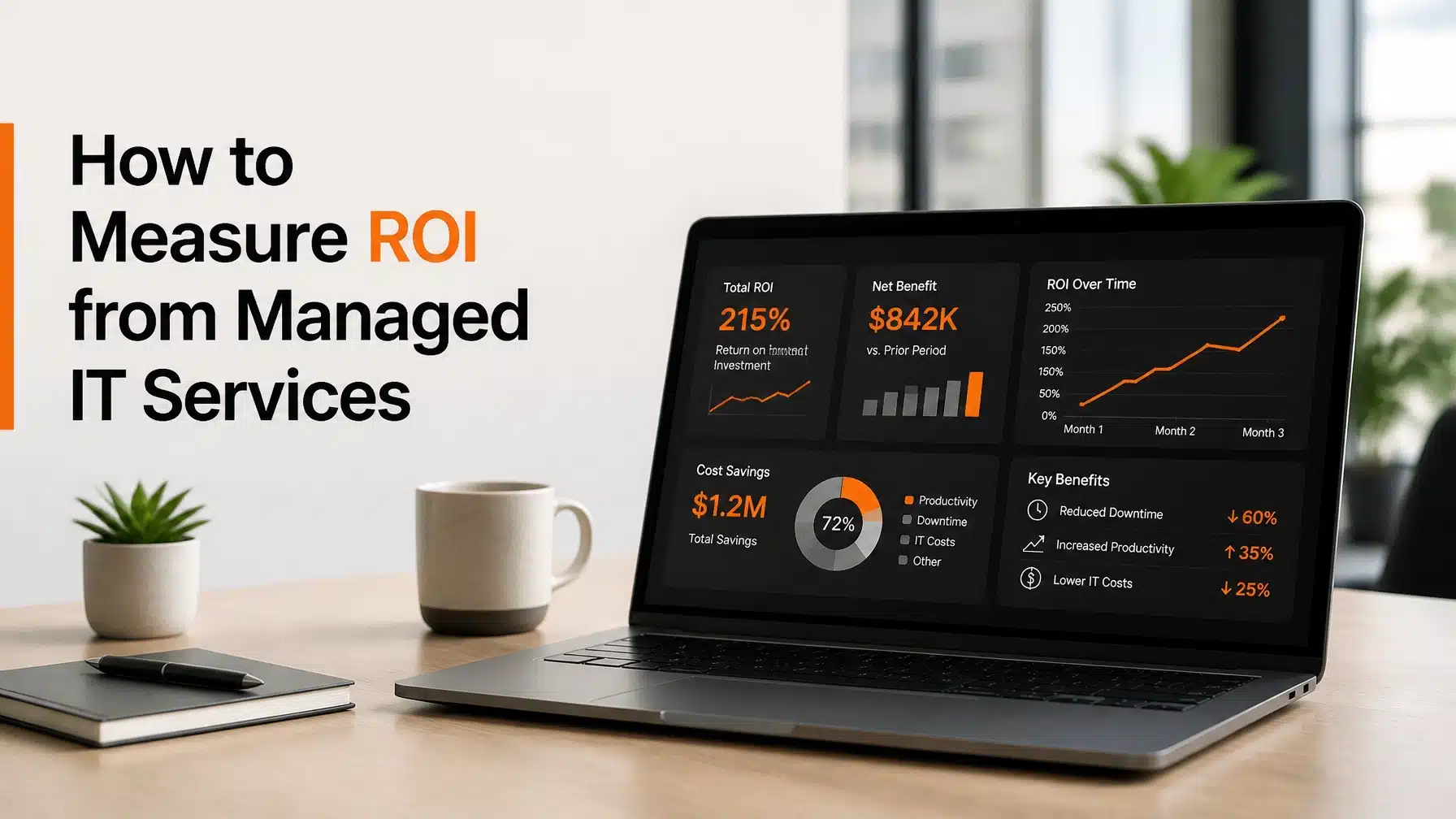
Measuring the ROI of managed IT services requires a shift in perspective. You must view IT as a value driver rather than a simple utility expense. A well-executed managed services model often delivers a typical ROI ranging from 150% to 300% over three years. This guide provides a comprehensive framework to help you quantify these benefits. We will explore tangible metrics and intangible strategic advantages. You will learn how to justify your technology investment to any stakeholder or board member.
Tangible Metrics for Managed IT Services ROI
The most immediate way to measure ROI is through direct financial impact. Managed IT services consistently reduce IT operational costs by an average of 30%. This reduction stems from moving away from the expensive break-fix cycle. Instead of paying for emergency repairs, you invest in a proactive subscription model. This approach stabilizes your budget and eliminates surprise invoices.
Reducing Unplanned Downtime
Unplanned downtime is a silent profit killer for small and mid-sized businesses. Statistics indicate that managed service providers (MSPs) reduce unplanned downtime by as many as 78%. When your systems stay online, your team remains productive. You can calculate this specific ROI by multiplying the hours of uptime gained by your average hourly revenue. For many firms, preventing just one major outage pays for the entire annual service contract.
Enhancing Employee Productivity
Productivity gains represent a significant portion of your managed IT services ROI. When employees experience fewer technical glitches, they focus on core business tasks. Faster support response times mean less waiting for a help desk technician. Furthermore, better tool utilization streamlines daily workflows. These incremental improvements accumulate into hundreds of saved hours across your entire organization.

How Modern Security Drives ROI
Cybersecurity is often viewed as a cost center. However, it actually functions as a high-yield investment. Organizations receive $4.60 back for every $1 spent on IT security. This return increases to $7.20 when combined with Managed Detection and Response (MDR). As a Microsoft Security Solution Partner, Terminal B focuses on preventing breaches before they occur. This proactive stance saves your organization from the devastating costs of ransomware and data recovery.
The Cost of a Data Breach
A single security incident can bankrupt a small business. Beyond the immediate recovery fees, you face legal penalties and brand damage. In regulated industries like healthcare or finance, compliance fines add another layer of risk. Investing in managed security ensures you meet strict regulatory standards like HIPAA or NIST. Consequently, you avoid these heavy financial burdens while protecting your reputation.
Security Awareness and Human Capital
Modern threats frequently target human behavior rather than just software vulnerabilities. A comprehensive security strategy includes ongoing training for your staff. Educated employees become your first line of defense. They identify phishing attempts and follow secure protocols. As a result, you reduce the likelihood of successful attacks. This cultural shift significantly boosts your overall security ROI.

Intangible Benefits: Beyond the Spreadsheet
Not every benefit of managed IT services appears on a balance sheet. However, these intangible factors are equally vital for long-term success. For instance, 91% of organizations now view managed services as critical to AI delivery. Staying competitive requires more than just functional computers. It requires a partner who can integrate emerging technologies like artificial intelligence into your business processes.
Strategic Focus and Peace of Mind
Managing an internal IT department is time-consuming and complex. By offloading this burden, your leadership team gains valuable bandwidth. You can refocus your energy on innovation and market expansion. Moreover, you gain the peace of mind that comes with 24/7/365 monitoring. Knowing that experts are watching your infrastructure allows you to sleep better at night.
Revenue Growth through Technology
There is a clear correlation between IT investment and business performance. SMBs that invest above the median in IT see 23% higher revenue growth. Reliable technology enables you to serve customers faster and more efficiently. It allows for seamless remote work and global collaboration. Therefore, your IT partner acts as a catalyst for your organization’s financial success.

The Skytivity Framework: A Strategic Approach to MSP ROI
At Terminal B, we use our proprietary Skytivity model to maximize your technology value. This approach goes beyond simple maintenance. We align your IT infrastructure with your specific business objectives. As a Microsoft Security Solution Partner, we leverage the full power of the Microsoft 365 and Azure ecosystems. This direct partnership ensures you receive the latest updates and most efficient cloud configurations.
Our framework prioritizes precision and security. We specialize in serving industries with high compliance requirements. This includes life sciences, construction, and high-tech firms. Our “Skytivity” subscription model provides a predictable cost structure. This allows you to forecast your IT spending with total accuracy. As a result, you can make more informed decisions about future growth and investments.
Implementing a Measurement System
To accurately track your managed IT services ROI, you should establish a baseline. Document your current IT spend, including internal salaries and hardware costs. Track your current downtime hours and security incidents. After six months with an MSP, compare these figures against the new data. You will likely see a significant improvement in both cost efficiency and system performance.
Review these metrics during your Quarterly Business Reviews (QBRs). Use this time to adjust your strategy based on the results. Technology evolves rapidly, and your IT plan must evolve with it. A consistent review process ensures you continue to extract maximum value from your partnership. Consequently, you maintain a competitive edge in your industry.
Why Local Ownership Matters
Many MSPs are currently backed by private equity firms. This often leads to a focus on short-term profits over long-term client success. In contrast, Terminal B remains a locally-owned partner. We are committed to the success of businesses across Texas and beyond. Our local roots mean we understand your unique market challenges. We prioritize building lasting relationships based on trust and results.
Our status as a Microsoft Security Solution Partner gives us direct access to advanced tools. We integrate these solutions into your environment without the delays of a middleman. This speed and expertise are crucial for maintaining a high ROI. We focus on simplifying your technology so you can focus on your mission. Partnering with a dedicated local expert ensures your IT remains an asset rather than a liability.
Conclusion: Start Your ROI Strategy Today
Measuring the ROI of managed IT services is essential for any modern organization. By tracking metrics like downtime reduction and security savings, you can prove the value of your investment. Remember that technology is a strategic tool for growth. A strong IT partner like Terminal B helps you unlock this potential. We provide the expertise and tools necessary to drive your business forward.
Are you ready to maximize your IT value? Schedule a strategy session with Terminal B today. We will help you build a technology roadmap that delivers measurable results. Let us simplify your IT and help you achieve your business goals. Our team is ready to provide the professional support you deserve.
Frequently Asked Questions
How long does it take to see a positive ROI from managed IT?
Most organizations begin to see a positive ROI within the first six to twelve months. Initial savings often come from cost avoidance and reduced downtime. Over three years, the typical ROI ranges between 150% and 300%. Consistent monitoring and strategy adjustments help accelerate these gains over time.
Is an MSP more expensive than an in-house IT person?
While the monthly fee may seem higher, the total cost of ownership is usually lower. An MSP provides an entire team of experts and advanced tools for a flat fee. In contrast, an in-house employee involves salary, benefits, and ongoing training costs. Most SMBs save roughly 30% on operational costs by switching to a managed model.
Can managed IT services help with regulatory compliance?
Yes, managed IT services are essential for maintaining compliance in regulated industries. An expert partner ensures your systems meet standards like HIPAA, NIST, or ITAR. They implement necessary security controls and maintain detailed logs for audits. This proactive management prevents expensive fines and legal complications.
What is the Skytivity model?
The Skytivity model is Terminal B’s proactive approach to IT management. It focuses on preventing issues before they disrupt your business operations. This subscription-based service provides 24/7 monitoring, maintenance, and expert support. It is designed to align your technology with your long-term business objectives.
Related Posts