Construction companies face IT challenges in construction industry because their work happens across offices, jobsites,…
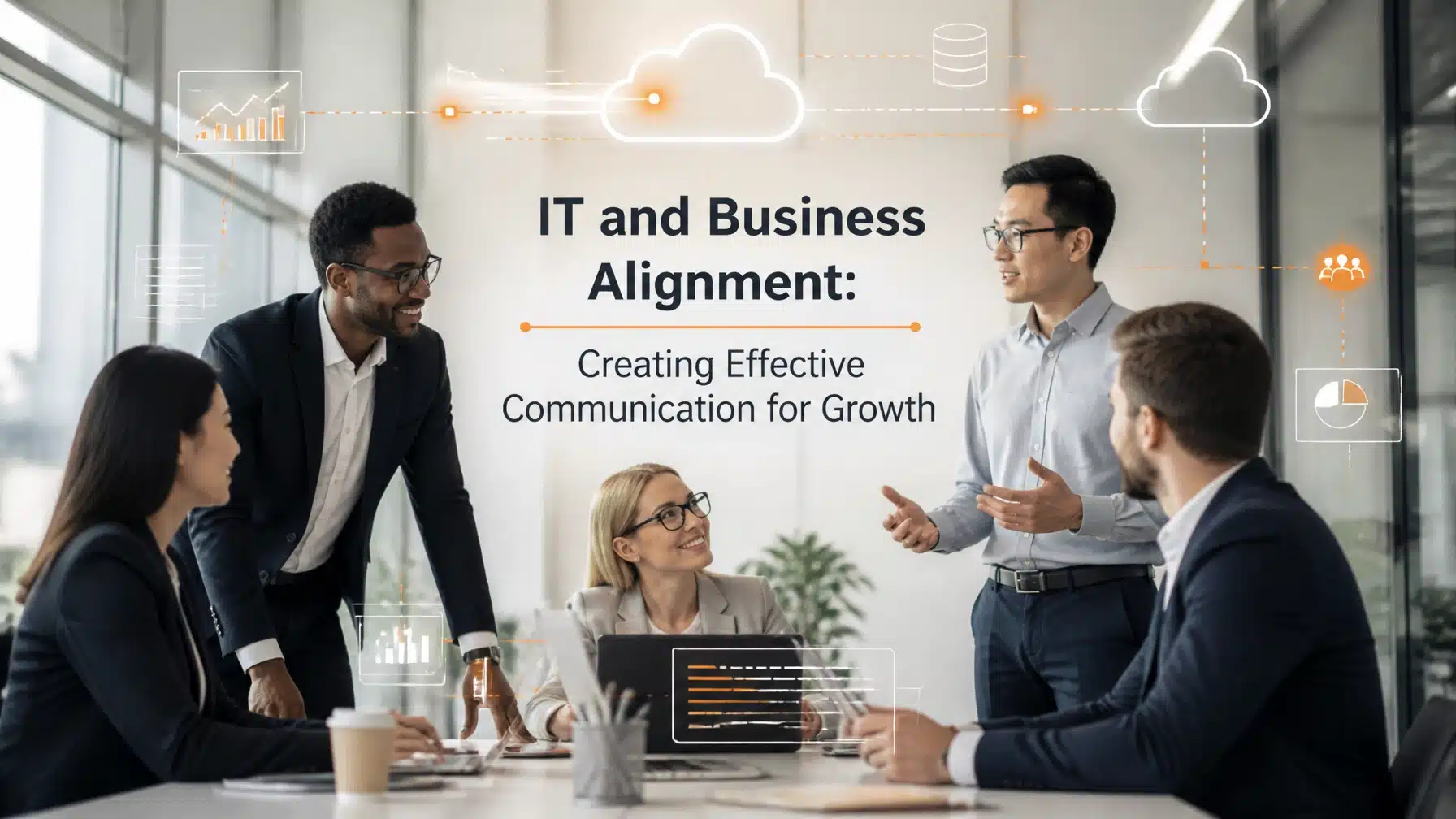
IT and Business Alignment: Creating Effective Communication for Growth
Updated: May 29, 2026
Is your technology infrastructure a catalyst for growth or a source of friction? For many organizations, the answer lies in the quality of IT and business alignment. This synchronization ensures that every technical initiative directly supports a specific corporate objective. When these two spheres operate in harmony, technology ceases to be a cost center and becomes a strategic growth engine.
Successful IT and business alignment requires more than just modern software. It demands a shared language, transparent communication, and unified Key Performance Indicators (KPIs). Recent 2026 research from NTT Data reveals a stark reality: only 51% of organizations report true strategy alignment between their technology and business goals. Consequently, the remaining 49% face slower innovation cycles and higher operational costs. According to Gartner, nearly 70% of digital transformation efforts fail specifically because KPIs do not align with strategic business outcomes.
To achieve meaningful growth, your organization must bridge the communication gap. You must treat IT as a foundational partner in every board-level discussion. This guide explores the modern barriers to alignment and provides a multi-layered strategy for creating a cohesive technical culture.
The High Cost of the IT-Business Disconnect
Misalignment is a silent drain on corporate resources. When your technical team operates in a silo, they may prioritize system stability over user experience or market speed. Meanwhile, business leaders might demand new features without understanding the underlying technical debt. This friction creates measurable inefficiencies that stifle scalability.
The 2026 Data and AI Trends report highlights that 99% of leaders struggle to define consistent business metrics across different departments. This lack of a “single source of truth” leads to wasted time and conflicting priorities. Moreover, legacy systems often consume up to 80% of IT budgets just to maintain the status quo. As a result, very little capital remains for innovation or proactive security measures.
When IT and business alignment fails, your organization risks:
- Wasted Investment: Implementing expensive tools that employees do not use.
- Security Vulnerabilities: Shadow IT emerges when employees use unsanctioned apps to bypass rigid corporate systems.
- Missed Market Opportunities: Slow technical deployment prevents your organization from responding to competitor moves.
- Operational Friction: Finance and IT departments “speak different languages,” leading to budget disputes and project delays.
Bridging the Language Gap: IT vs. Operations
Communication is the primary bridge for effective IT and business alignment. Historically, technical teams utilized complex jargon that left executives feeling excluded. Conversely, business leaders often viewed IT as a “black box” that consumed cash without producing visible value. To fix this, you must foster a culture where both sides learn the basics of each other’s domain.
Think of it this way: IT speaks French, while finance speaks Spanish. Without a translator, the two cannot collaborate on a shared vision. Business leaders do not need to be programmers. However, they should understand the impact of technical concepts like cloud scalability or Managed IT Services on the bottom line.
Similarly, IT professionals must understand the “why” behind business requests. If the sales team needs a new CRM integration, the IT team should understand how that integration shortens the sales cycle. This context allows the technical team to offer better solutions that might even exceed the initial request.
Industry-Specific Impact: Where Alignment Matters Most
The stakes for IT and business alignment are even higher in highly regulated or precision-dependent industries. A breakdown in communication does not just affect the budget; it can impact compliance, safety, and patient or client outcomes.
Precision in Manufacturing
In the manufacturing sector, alignment translates directly to uptime. If your IT infrastructure does not sync with your shop floor operations, supply chain disruptions follow. Aligned organizations use IoT data and predictive maintenance to keep machines running. When the business side communicates production goals clearly, IT can build the resilient networks necessary to support them.

Security in Healthcare
For healthcare providers, alignment is a matter of HIPAA compliance and patient care. IT teams must secure Electronic Health Records (EHR) while ensuring doctors have instant access to data. Without deep healthcare IT solutions, a clinic may face catastrophic data breaches or system downtime during critical procedures. Alignment ensures that security protocols do not hinder the speed of care.

Speed in Financial Services
In finance, digital transactions happen in milliseconds. Alignment ensures that the IT roadmap supports the rapid deployment of new fintech tools. If the business wants to offer a new mobile banking feature, the IT team must ensure the backend can handle the load without compromising security.
5 Strategic Steps to Achieve IT and Business Alignment
Achieving synchronization requires a deliberate approach. You cannot expect alignment to happen by accident. Follow these five steps to ensure your technology supports your growth objectives.
1. Establish Shared KPIs
Move beyond technical metrics like “uptime” and “server load.” Instead, define success through business outcomes. These might include customer acquisition cost, time-to-market for new products, or employee productivity levels. When both teams aim for the same targets, they naturally work together more effectively.
2. Include IT Leaders in Strategic Planning
Do not wait until a project is half-finished to invite your IT team to the table. Involve them in the initial planning phases. As a Microsoft Security Solution Partner, Terminal B often sees how early involvement prevents costly technical pivots later in the project lifecycle.
3. Modernize Legacy Systems
Legacy hardware and software are major barriers to alignment. They are rigid and difficult to integrate with modern cloud solutions. According to 2026 research, 69% of hardware in use will be unsupported by 2027. Investing in the benefits of Azure cloud allows your organization to stay agile and responsive to business needs.
4. Foster a Security-First Culture
Alignment also includes shared responsibility for cybersecurity. When business leaders prioritize security, the IT team can implement robust measures like Multi-Factor Authentication (MFA) and Zero Trust architectures without facing internal resistance. This partnership protects the organization’s reputation and financial stability.
5. Adopt a Strategic IT Consulting Model
Many mid-sized firms lack the internal resources to maintain deep alignment. Engaging with expert IT consulting provides a fresh perspective. A consultant acts as the translator, helping you identify technical gaps that hinder your specific business goals.
The Role of a Microsoft Security Solution Partner
Navigating the complexities of modern technology requires an expert partner who understands both the technical and business landscapes. Terminal B serves as a Microsoft Security Solution Partner to provide that bridge. We do not just fix computers; we align your IT infrastructure with your long-term vision.
Our proactive “Skytivity” model focuses on maintenance, monitoring, and strategic growth. We help organizations in Texas and beyond move away from the “break-fix” mentality. By focusing on your business outcomes, we ensure your technology investments deliver measurable ROI. Whether you need to secure your remote workforce or migrate complex databases to the cloud, our team provides the clarity and expertise you need to succeed.
Conclusion: Turning Alignment into a Competitive Advantage
Effective IT and business alignment is not a one-time project. It is an ongoing commitment to communication and shared goals. Organizations that master this alignment grow significantly faster than those that remain siloed. By breaking down the language barriers and treating IT as a strategic partner, you position your organization for long-term scalability and resilience.
Technology should never be a mystery to your leadership team. It should be a clear, powerful tool that you use to achieve your most ambitious business goals. Start the conversation today to bridge the gap and unlock your full growth potential.
Ready to Align Your IT Strategy with Your Growth Goals?
Don’t let technical silos hold your organization back. Terminal B helps you translate complex technology into clear business value. Let’s discuss how our managed IT solutions can drive your success.
Book your strategy session with Terminal B today.
Frequently Asked Questions
What is the biggest barrier to IT and business alignment?
The most significant barrier is usually a lack of shared communication and conflicting priorities. When IT focuses solely on technical maintenance while business leaders focus only on immediate revenue, the two departments drift apart. Bridging this gap requires establishing shared KPIs and including IT leaders in executive-level strategic planning.
How do you measure the success of IT and business alignment?
Success is measured through business-centric metrics rather than just technical uptime. Look for improvements in project delivery timelines, a reduction in shadow IT usage, increased employee productivity, and a higher ROI on technology investments. If your IT initiatives are directly linked to reaching quarterly or annual business goals, your alignment is improving.
Why is IT and business alignment important for cybersecurity?
Alignment ensures that security measures are integrated into the workflow rather than being viewed as an obstacle. When business leaders understand the risks, they are more likely to support investments in EDR, MFA, and security awareness training. This unified front creates a stronger “security culture” that protects the entire organization.
How does a Microsoft Security Solution Partner help with alignment?
A Microsoft Security Solution Partner like Terminal B provides the strategic guidance needed to leverage cloud and security tools effectively. We help you navigate complex licensing, implement Zero Trust frameworks, and ensure your Microsoft 365 environment is optimized for your specific business processes.
About the Author: Greg Bibeau
Greg Bibeau is the CEO and founder of Terminal B, a premier Managed IT Services provider based in Austin, Texas. With over three decades of experience in the IT industry, Greg specializes in helping mid-sized organizations align their technical infrastructure with strategic growth objectives. As a leader of a Microsoft Security Solution Partner firm, he is passionate about simplifying technology and empowering businesses through proactive, expert-led IT management.
Related Posts