Cloud adoption offers unparalleled agility for modern businesses. However, that agility often comes with a…
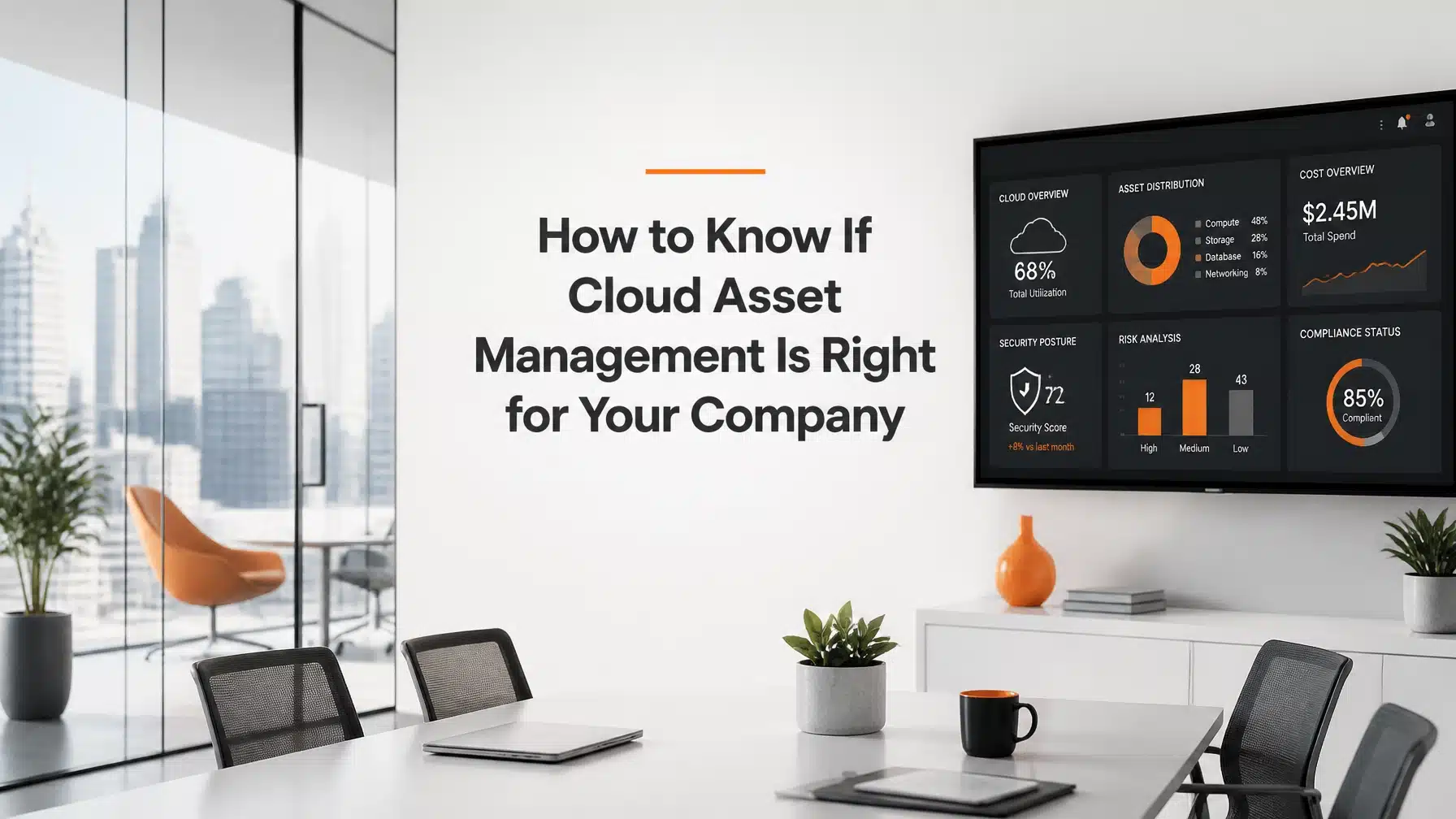
How to Know If Cloud Asset Management Is Right for Your Company
Updated June 1, 2026
Modern businesses increasingly rely on a complex web of digital resources to maintain a competitive edge. However, this rapid shift to the cloud often leads to unmanaged costs and significant security vulnerabilities. Consequently, many organizations now struggle to maintain visibility over their entire digital footprint.
Cloud asset management provides the structured framework necessary to identify, track, and optimize every resource within your cloud environment. This practice ensures that your organization only pays for the resources it actually uses while maintaining a robust security posture. If your organization operates across multiple cloud providers or utilizes dozens of SaaS applications, implementing a cloud asset management strategy is no longer optional.
What is Cloud Asset Management?
Cloud asset management is the continuous process of cataloging and managing all digital assets located in a cloud environment. These assets include virtual machines, storage buckets, API keys, and Software-as-a-Service (SaaS) subscriptions. Unlike traditional IT asset management, cloud-based management must account for the dynamic and ephemeral nature of cloud resources.
As a Microsoft Security Solution Partner, we often see organizations deploy resources in seconds without a formal tracking mechanism. This lack of oversight leads to “zombie” resources that continue to rack up costs long after their project ends. Therefore, effective management requires real-time discovery and automated governance to keep pace with modern cloud infrastructure.
The Modern Landscape: Shadow IT and SaaS Sprawl
The current digital landscape presents unique challenges that didn’t exist just a few years ago. Shadow IT occurs when departments or individual employees purchase software or cloud services without the knowledge of the IT department. This trend has exploded because of the ease with which anyone can sign up for a new SaaS tool using a corporate credit card.
Recent industry data suggests that mid-sized enterprises now run over 100 distinct SaaS applications on average. Furthermore, research indicates that 30% to 50% of these applications are not centrally managed by IT. This lack of visibility creates massive “SaaS sprawl,” which leads to redundant tools and overlapping functionalities.

Moreover, approximately 20% to 30% of cloud spend is wasted on unused licenses or over-provisioned resources. By implementing cloud asset management, your organization can regain control over this hidden spend. You will also eliminate the security risks associated with unmanaged applications that lack proper cybersecurity services or compliance oversight.
5 Signs You Need Cloud Asset Management Immediately
Determining whether your organization needs a dedicated management solution depends on your current operational pain points. If you recognize any of the following signs, it is time to prioritize your cloud inventory.
1. Unpredictable Monthly Cloud Bills
Do you find your Microsoft Azure or AWS bills fluctuating wildly without a clear explanation? If so, you likely have resources running that no one is monitoring. Effective management allows you to tag resources by project, department, or owner for precise cost allocation.
2. Redundant Software Subscriptions
If your marketing team uses one project management tool while your sales team uses another, you are likely wasting money. Cloud asset management helps you identify these overlaps. Consequently, you can consolidate vendors and negotiate better enterprise pricing.
3. Lack of Visibility During Security Audits
Compliance requirements, such as HIPAA or NIST, demand a complete inventory of all systems handling sensitive data. If you cannot produce a real-time list of every cloud asset in your environment, you will likely fail your next audit. This is especially critical for organizations in the healthcare or financial services industries.
4. High Employee Turnover and “Orphaned” Accounts
When an employee leaves your organization, their access to various SaaS platforms must be revoked immediately. Without a central asset registry, it is easy to miss obscure accounts. These orphaned accounts remain active, costing you money and providing a backdoor for potential cyber threats.
5. Frequent “Resource Not Found” or Configuration Errors
A chaotic cloud environment often leads to technical debt and operational friction. When developers cannot find the resources they need, they often create duplicates. This cycle increases complexity and makes IT business alignment nearly impossible to achieve.
The Strategic Benefits of a Managed Approach
While some companies attempt to manage cloud assets using spreadsheets, this method quickly becomes obsolete. A proactive strategy involving IT consulting services and specialized tools offers several long-term advantages.
Enhanced Security and Risk Mitigation
Every unmanaged cloud asset represents a potential entry point for attackers. By maintaining a single system of record, your security team can apply consistent policies across all resources. This includes enforcing Multi-Factor Authentication (MFA) and ensuring that all data storage is properly encrypted.
FinOps and Cost Governance
FinOps is the practice of bringing financial accountability to the variable spend model of the cloud. Cloud asset management serves as the foundation for FinOps. It provides the granular data needed to right-size virtual machines and delete idle storage disks. As a result, organizations typically see a significant reduction in their annual cloud expenditures.
Operational Efficiency
Automated discovery tools remove the manual burden of tracking assets. This allows your IT team to focus on strategic projects rather than administrative tasks. Furthermore, a centralized dashboard improves communication between finance, IT, and department heads regarding technology investments.

Decision Framework: Is It Right for You?
Not every organization requires a high-end cloud asset management platform. However, most modern businesses will benefit from at least a foundational approach. Use the following framework to evaluate your organization’s specific needs.
If your organization manages sensitive data or operates in multiple regions, the complexity increases exponentially. In these cases, the risk of non-compliance and the cost of waste far outweigh the investment in a management solution.
Your Cloud Asset Management Implementation Checklist
Starting a management initiative can feel overwhelming. Follow this step-by-step checklist to ensure a successful rollout.
- Step 1: Centralize Discovery. Use automated tools to scan your Azure, AWS, and SaaS environments. Don’t forget to review expense reports to find hidden “Shadow IT” purchases.
- Step 2: Establish Tagging Standards. Define a clear tagging schema for all cloud resources. Every asset should have an owner, a cost center, and a purpose.
- Step 3: Define Governance Policies. Determine who is authorized to provision new resources. Implement automated “guardrails” to prevent expensive or insecure configurations.
- Step 4: Integrate with HR Systems. Connect your asset management platform to your employee directory. This ensures that accounts are automatically provisioned or deprovisioned during employee transitions.
- Step 5: Perform Regular Rationalization. Schedule a quarterly review to identify redundant apps and underutilized licenses.
- Step 6: Partner with Experts. If your internal team lacks the bandwidth, consult with a Microsoft Security Solution Partner to manage the technical heavy lifting.

Common Pitfalls to Avoid
Even with the best intentions, cloud asset management projects can stall if not handled correctly. Avoid these common mistakes:
- Treating it as a one-time project. Cloud environments change daily. Therefore, management must be a continuous, automated process.
- Ignoring the “human” element. You must communicate the “why” behind these changes to your employees. Otherwise, they may continue to bypass IT to get their work done.
- Focusing solely on cost. While saving money is important, security and compliance are equally vital. Don’t sacrifice a secure Azure cloud architecture just to shave a few dollars off the bill.
- Over-complicating the initial rollout. Start with your highest-cost or highest-risk assets first. You can always expand the program as your maturity grows.
What to Ask Your MSP or Cloud Vendor
When evaluating a partner for cloud asset management, it is crucial to ask the right questions. This ensures they can meet the specific technical and compliance needs of your organization.
- “How does your solution handle multi-cloud and SaaS discovery?” You need a tool that can see beyond just one provider.
- “Can you provide automated compliance reports for my specific industry?” If you are in healthcare, you need HIPAA compliance documentation.
- “What is your process for identifying and remediating shadow IT?” They should have a clear strategy for discovering unmanaged apps.
- “How do you measure the ROI of your asset management services?” A good partner will provide regular reports on cost savings and risk reduction.
Start the Conversation with a Strategy Session
Cloud asset management is the key to unlocking the full potential of your digital investments without the associated risks. At Terminal B, we help organizations across Texas and beyond simplify their IT complexity. Our proactive “Skytivity” model ensures your cloud environment remains secure, compliant, and cost-effective.
Stop guessing about your cloud spend and start managing it with precision. Whether you are looking to optimize your benefits of Azure cloud or secure your entire SaaS portfolio, we are here to help.
Contact Terminal B today to schedule your strategy session and take control of your digital future.
Frequently Asked Questions
What is the difference between ITAM and Cloud Asset Management?
IT Asset Management (ITAM) traditionally focuses on physical hardware like servers and laptops. In contrast, cloud asset management deals with virtual resources and SaaS subscriptions that can be created or deleted in seconds. Cloud management requires more frequent updates and automation to be effective.
Does cloud asset management help with cybersecurity?
Yes. It significantly improves your security posture by identifying “Shadow IT” and ensuring that all cloud resources follow your organization’s security policies. You cannot protect what you cannot see; therefore, visibility is the first step in cybersecurity services.
How much can a company save with cloud asset management?
While results vary, many organizations find that 20% to 30% of their cloud spend is wasted on unmanaged resources. By identifying and eliminating this waste, the management process often pays for itself within the first few months.
Is cloud asset management only for large enterprises?
While larger organizations face more complexity, small and mid-sized businesses (SMBs) are often more vulnerable to cost spikes and security gaps. Any company that relies on the cloud for business-critical operations should have a basic asset management strategy in place.
About the Author: Greg Bibeau
Greg Bibeau is the Founder and CEO of Terminal B, a premier managed IT services provider based in Austin, Texas. With over three decades of experience in the technology industry, Greg has helped hundreds of organizations navigate the complexities of cloud migration and infrastructure management. He is a passionate advocate for simplifying IT and aligning technology with long-term business growth.
Related Posts